L'Étrange Festival 2026: What I Saw, Who I Met, and Why This Genre Festival Should Be on Your Radar
Sep 15, 2026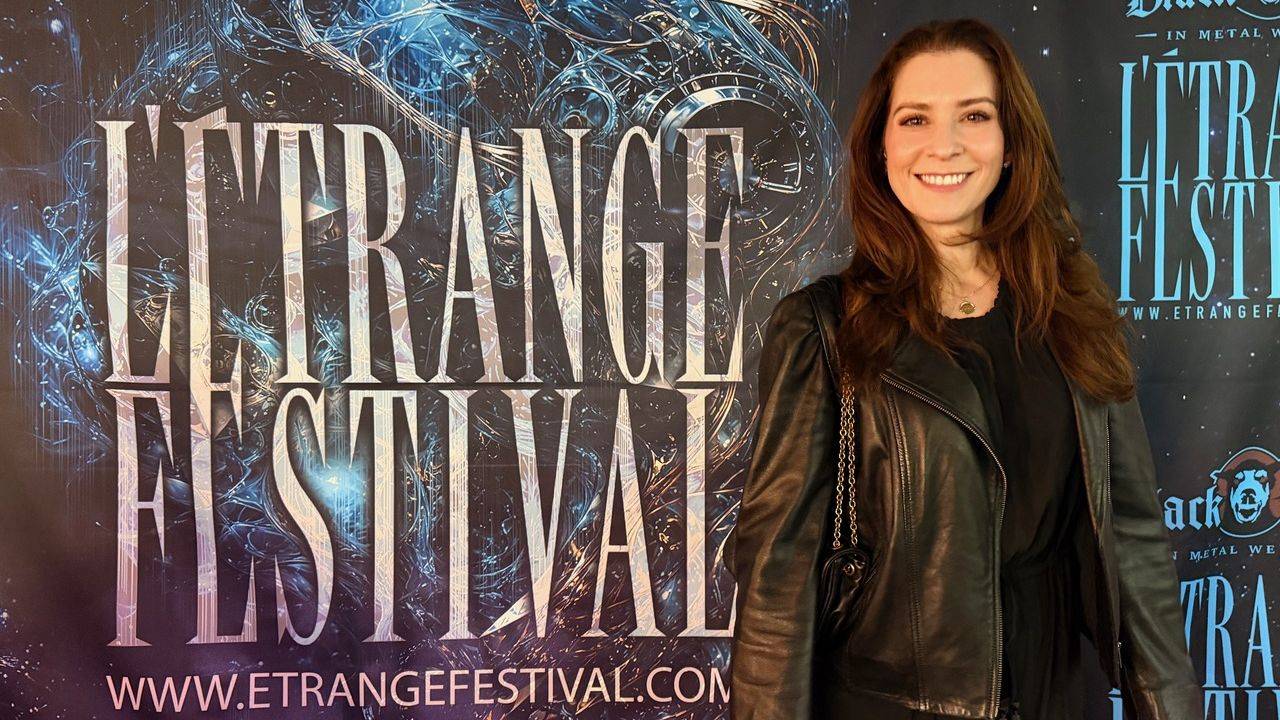
I've been to a lot of festivals. As a filmmaker and a programmer, I've seen them from both sides of the table — and I can tell you that not all of them are created equal. L'Étrange Festival, held annually at the Forum des Images in Paris, is one of the rare ones that reminds you why you fell in love with cinema in the first place.
I was there last week. Here's what I experienced.
Films That Won't Fit Neatly in a Box
L'Étrange has been running since 1993, and its identity is built on a single, deceptively simple premise: support work that defies categorization. Festival director Frédéric Temps describes it as "neither a traditional art-house nor a horror or fantastic film festival" — and that's not a hedge. It's a mission statement.
What that looks like in practice is a program that moves from music documentaries to surrealist shorts to adventurous features without apology or explanation. The audience comes ready for that.
They're not there to have their expectations confirmed — they're there to have them overturned.
That breadth is what makes L'Étrange genuinely difficult to define, and genuinely exciting to attend.
The Rock-and-Roll Documentaries
Two music docs stood out for me this year, and they're worth naming because they illustrate exactly how far the festival's programming identity extends beyond horror.
Fugs Film! — a documentary about the legendary New York avant-garde band The Fugs — was the kind of film that feels like it was made for an audience of exactly the right people, and somehow that audience was all in one room in Paris. Irreverent, historically rich, and completely its own thing.
More Punk than Punk was the other. A documentary that takes punk not as a genre but as an attitude — and then follows that attitude wherever it leads. It's confrontational in the best sense. Watching it in a packed theatre, surrounded by an audience that was completely with it, was one of those festival moments that's hard to replicate anywhere else.
Both films were exactly what L'Étrange is for: work that might not find its natural home at a conventional festival, but landed perfectly here.
Meeting the Team Behind More Punk than Punk
I had the chance to speak with director Azeem Rajulawalla and producer/editor Thomas Sheriff. It was their first film and their first time doing the festival circuit — and they were refreshingly candid about the learning curve.
They figured a lot of it out by trial and error. In hindsight, they said, they wished they'd brought in a festival strategist early on — someone who could have helped them avoid some of the mistakes that cost them time and opportunities in the early stages of their run. That's a conversation I've had with a lot of first-time filmmakers, and it never gets less true.
What's notable is that despite navigating the circuit largely on instinct, they ended up in some genuinely great rooms. Landing at a curated festival like L'Étrange isn't an accident — it's the result of a film finding its audience, one submission at a time. Their persistence paid off. And sitting with them after the screening, it was clear they understood exactly what that meant.
Mancave: The Film I Can't Stop Thinking About
The short film competition at L'Étrange is worth your attention every year, but this year it produced something I haven't been able to shake.
Mancave, by Norwegian director Fredrik S. Hana, won the Grand Prix Canal+ for short films — and it deserved it completely.
I'm going to be careful here, because this is a film that needs to be experienced rather than explained. But I'll tell you what it did to me as a viewer.
It starts simply enough. A suburban family of four. The kind of domestic scene you've seen a hundred times. Then the mother and children go looking for the father in his garage — his "man cave" — and find him missing. What follows is the mother's increasingly obsessive search through that space, looking for clues, trying to understand where he's gone.
And then it gets strange. Genuinely, beautifully, unsettlingly strange.
What I loved about it was the control. The film knows exactly when to hold back and when to push further. The visual world it builds is stunning — and the humor is pitch-perfect. The wife moves through increasingly surreal surroundings delivering completely deadpan lines — "Honey, you know you can tell me anything" — with a straight face that made the whole theatre laugh and lean forward at the same time.
That combination — dread and absurdity, visual invention and emotional grounding — is hard to pull off. Mancave pulls it off. I was on the edge of my seat the entire time, not because I was scared, but because I genuinely had no idea where it was going. That feeling is rarer than it should be.
It's the kind of short that reminds you what the format can do when someone is actually swinging for something.
The Closing Night Film: Hope
I also want to say a word about the closing night screening, because it speaks to something important about what L'Étrange has become.
The film was Hope — the long-awaited return of Korean director Na Hong-jin, whose previous film The Wailing became a modern genre classic. This one is a sci-fi epic with an extraordinary international cast: Hwang Jung-min, Zo In-sung, Hoyeon, Michael Fassbender, Alicia Vikander, and Taylor Russell. It premiered in the main competition at Cannes this year, where it was nominated for the Palme d'Or, and Neon gave it a 1,500-theater US release — the widest rollout for a Korean film since Parasite.
Securing that screening for closing night was a genuine get for the festival.
The Audience Experience
Every screening I attended was a packed house — L'Étrange audiences show up in droves.
The Forum des Images has three cinema halls, the largest seating 444 people. For the closing night film, the line for ticket holders started forming at least an hour before the screening — and it wound around the entire lobby floor and down the stairs. There was a standby line as well, for people willing to wait on the chance of getting in.
That's not a casual audience. These are true fans of adventurous cinema — people who plan around it, queue for it, and bring genuine enthusiasm into the room. When a film lands with a crowd like that, you feel it. The collective energy of a packed house that came ready to be surprised is one of the things you simply cannot replicate on a screen at home.
What the Awards Mean for Filmmakers
A quick note on the prizes, because they matter beyond the ceremony.
The Grand Prix Nouveau Genre Canal+ for features went to Tristes Tropiques (Seulpen Yeoldae), a Korean film by Park Hoon-jung. That award includes the purchase of French premium broadcast rights by Canal+ Cinéma — a concrete distribution outcome attached to a festival win.
Mancave took the Grand Prix Canal+ for short films and will also be acquired and broadcast by Canal+. For a short film, that's a significant professional result.
This is worth understanding if you're building your festival strategy: L'Étrange is not just a prestige credit. For the right film, it's a broadcast deal.
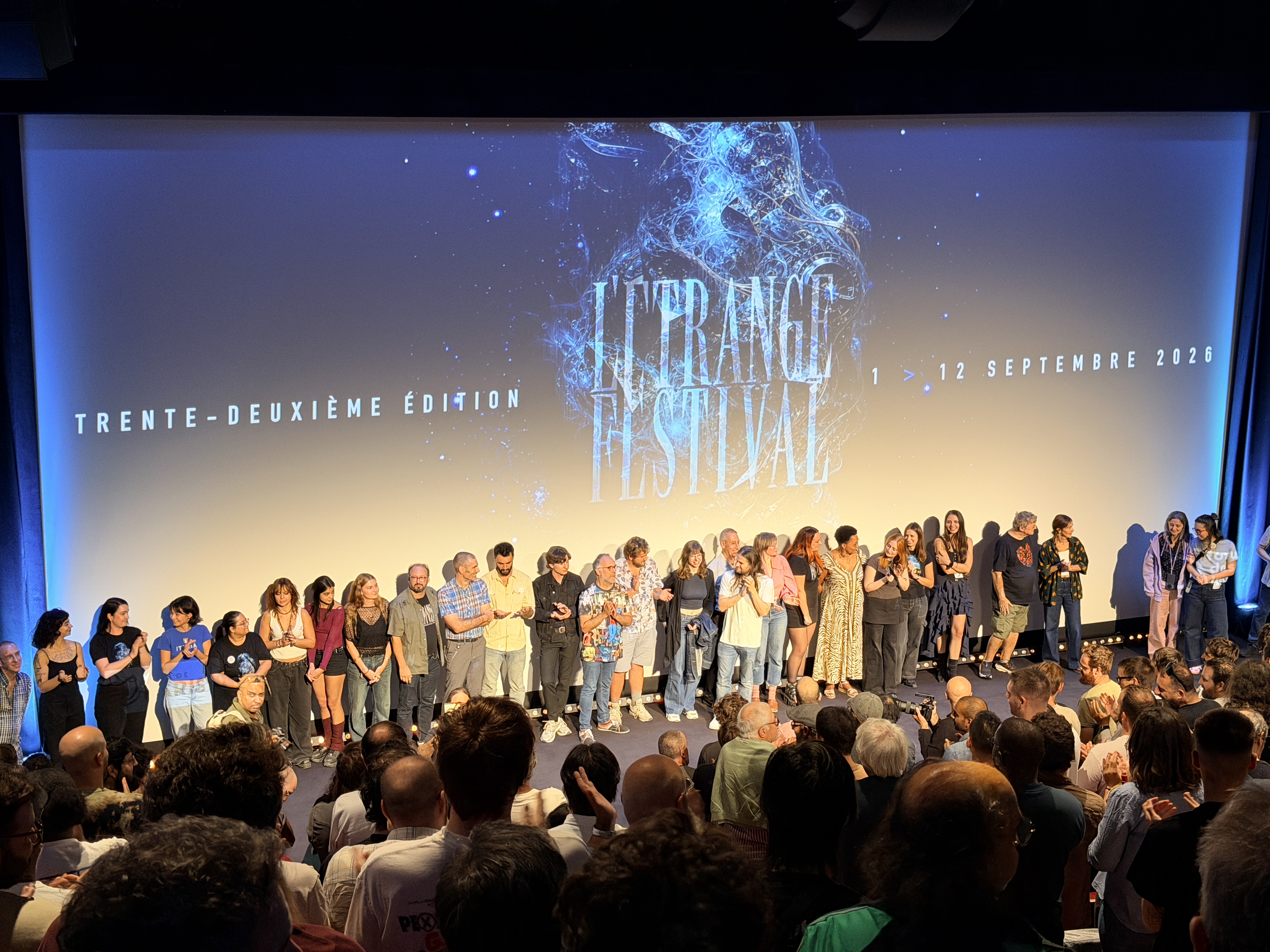
2026 Filmmakers receive a standing ovation on closing night of Étrange.
Who Should Be Researching This Festival
L'Étrange is entirely curated. They don't run an open submission platform — instead, the team actively tracks films that have performed well at other respected genre festivals, and when something catches their eye, they reach out directly and invite the filmmaker to submit. That's how they found my film Victim No. 6 — after its run at Fantasia in 2022, L'Étrange reached out and invited submission. That kind of outreach is one way in.
But it's not the only way.
You can email the festival directly. Introduce your film, include a trailer link, explain why you think it's a fit, and tell them where else it has screened — or if it hasn't screened yet, say so honestly. They prefer that kind of personal, direct communication with filmmakers over a form submission. If they're interested, they'll respond — and if they ask for a screener. Just keep in mind that shorts must be under 25 minutes (credits included) and no older than 1 year by the dates of the next edition. Also note: L'Étrange does not charge submission fees.
If your film is strange, hybrid, musical, or genuinely difficult to categorize — study the past programs. If your work shares DNA with what's been selected before, that's your signal.
And one more thing, because I don't want to leave it out — the filmmakers I spoke with described L'Étrange as one of the warmest festival experiences they'd ever had. Hotel accommodation covered. Lunch, drinks, and snacks at the Forum des Images. A genuine effort to get you tickets, introduce you to people, and make you feel like a guest rather than a submission number. Étrange goes out of their way to treat their filmmakers well.
That culture starts at the top. A sincere merci beaucoup to Géraldine Macé and Marc Troonen for the invitation and the warm welcome. You've built something genuinely special.