Why Most Filmmakers Are Submitting to Festivals Wrong And What Strategic Submission Actually Looks Like
Aug 02, 2026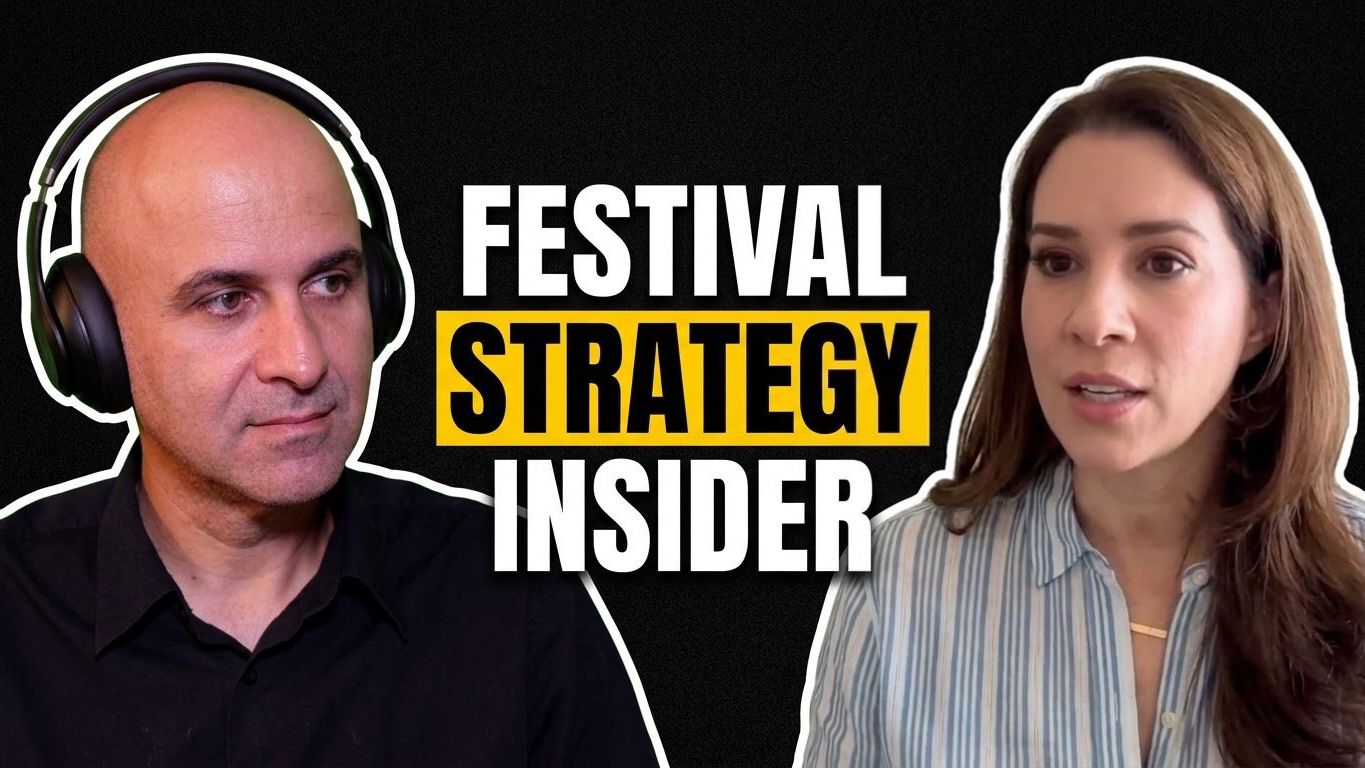
By Heather Brittain | Film Festival Insider
Most filmmakers approach the festival circuit the same way: submit to as many festivals as possible, hope something sticks, and repeat. It feels like strategy. It is not.
After more than a decade on both sides of the festival table — as an indie filmmaker running my own films through the circuit and as a programmer and vice chair of the board at the Garden State Film Festival — I can tell you exactly where the disconnect is. And it is not your film. Most of the time, it is the submission.
I recently sat down with Kostantinos Kovanis on the Film Tech and Finance podcast to break down what strategic festival submission actually looks like, why the AI tool I built is changing access for indie filmmakers, and why in-person festivals still matter more than most people realize. Here are the key takeaways.
The Local Loop Is Not a Strategy
There's a pattern I see constantly with filmmakers who come to me frustrated. I call it the local loop. They submit to the same handful of festivals. They build community. They get validation. And none of that is bad — community and validation are genuinely valuable. But their festival run is not creating lift. It is not translating into new opportunities, press, funding, or representation.
Submitting with volume is not the same as submitting with intention. And the difference between those two approaches is often the difference between a festival run that moves your career forward and one that just keeps you busy.
On the programming side, I've watched strong films get passed over not because the film was bad, but because the submission was not positioned well. The materials did not do the film justice. The festival was not the right fit. The filmmaker's goals did not match the festivals they were targeting.
"I just became obsessed with helping filmmakers move from 'I'm submitting and seeing where it lands' to 'I'm submitting with intention and moving my career forward.'"
That obsession is what built Film Festival Insider.
What Strategic Submission Actually Looks Like
When I work with a client one-on-one, the first thing I do is watch their film — with fresh, unattached eyes. That distance makes a difference. I often see genre possibilities the filmmaker never considered. I see where the film fits in ways that open up entirely new audience opportunities. And that changes everything about how we position it.
Strategic submission is built on a few non-negotiables:
- Know what your goals are before you submit. Distribution, representation, networking, press, and community building require different festival strategies. Not all festivals are created equal, and the right festival for one filmmaker's goals is the wrong one for another's.
- Control your narrative on every platform. Your FilmFreeway page, your IMDB page, your Letterboxd profile — these should not be afterthoughts. Set it up first. Own your story.
- Think about the marketing from day one. Having a photographer on set, thinking about your logline and tagline during production — the earlier you are thinking about positioning, the more leverage you have when you are ready to submit.
- Know which festivals cancel out your premiere status. Submitting without understanding how premiere eligibility works can close doors at festivals that matter to you. The order in which you submit is a strategy, not an afterthought.
And once you are accepted — show up. The work does not end at the acceptance email. Getting butts in seats, doing the Q&A, making the connections in the room with other filmmakers: that's where the real return on your festival investment lives.
Your Film Is a Very Expensive Business Card
Online film festivals exploded during COVID for a reason. When the world locked down, they delivered something real: connection when nothing else was available. My own festival, the Garden State Film Festival, pivoted to a live-streamed format in 2020 almost overnight. It worked because it had to.
Since then, many festivals have kept a simultaneous online component — and I think that can be genuinely valuable. Being able to watch Sundance films from home, tracking what's landing at major festivals in real time, is a real opportunity for filmmakers who can't be there in person.
But exclusively online festivals are a different conversation. For the most part, they are a laurels play. The festival makes money. You get a badge to post. And you miss everything that actually moves careers forward.
You don't hear whether that jump scare actually landed. You don't get the live audience feedback that tells you whether your edit is working. You don't make the connection with the filmmaker sitting next to you in the theater who ends up being your next collaborator or your next investor.
"Your film is a very expensive business card. If you hand it to me in person and I look you in the eyes, I am going to remember you. If you drop it in a fish bowl, maybe someone fishes it out. But they are not going to associate it with you."
Presenting in person raises your profile in people's memories. It raises your reputation as a filmmaker. Online-only festivals, for the most part, miss that entirely.
Why I Built Festival Fixr™ — and What It Actually Does
Festival strategy has always been expensive and opaque. Most indie filmmakers can't afford a full-time consultant managing their submissions. And for a long time, that meant the filmmakers with the biggest budgets had a structural advantage — not because their films were better, but because they had access to expertise that others did not.
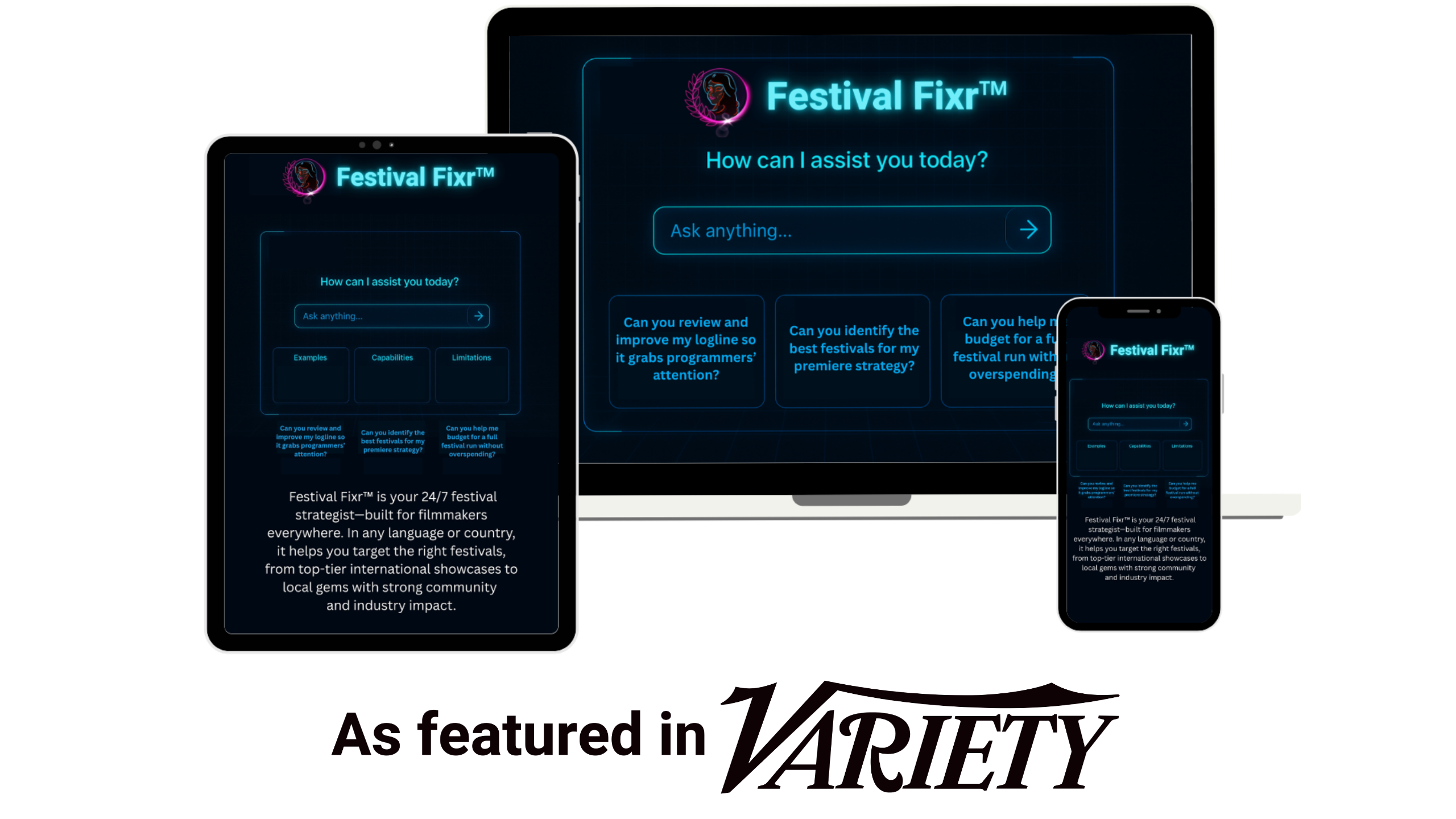
Festival Fixr™ is my answer to that. I took the same IP and methodologies behind my Insider Track™ course and trained an AI with them — essentially downloading my brain into a tool that is available to any filmmaker, at any budget, around the clock.
Here is what she does:
- Helps filmmakers identify the right festivals for their specific film and goals
- Flags scam festivals — a real and underreported problem on the circuit
- Builds a submission plan, including the strategic order of submissions
- Thinks through premiere status implications so you are not accidentally closing doors
- Works in every language, across festivals worldwide
- Pulls current submission dates from FilmFreeway in real time
Festival Fixr™ was featured in Variety earlier this year as the first AI film festival strategist ever. And what it doesn't do is replace the human judgment that comes from watching a film with real eyes and real experience. Rather, Festival Fixr™ makes the strategic layer — the research, the targeting, the planning — accessible to filmmakers who could never have afforded it before.
"She’s not going to hold your purse while you are on the red carpet. But she is going to help you get there."
What to Expect From a Festival Run — And How to Maximize It
One of the most common questions I get is about ROI. What should a filmmaker actually expect from a festival appearance?
The honest answer is: it depends on your goals. And that's exactly why you need to be clear on your goals before you submit.
Some filmmakers are chasing distribution. Some want representation. Some are building a local filmmaker community. Some are looking for their next collaborator or investor. Different goals require different festival targets — and different ways of showing up once you are there.
A few things worth knowing:
- Genre festivals tend to punch above their weight on press. The genre community is hungry for new content, and even smaller genre festivals often generate coverage that larger general festivals do not.
- Agencies are watching features at festivals they do not always publicize. Some festivals have quiet relationships with major agencies that are not promoted. Knowing which ones matters.
- If you are trying to get representation, know what you are working on next. An agency that loves your film is going to ask what comes after it. Have an answer.
- Press relationships are buildable. Even without a publicist, you can identify the publications covering a specific region or genre and send a tailored press release for each festival. Festival Fixr™ can help with this.
Ready to Submit With Intention?
If your festival run has felt like submitting into a void — like you cannot see the rhyme or reason to why some films get in and others do not — that is not a talent problem. It’s a strategy problem. And strategy is learnable.
Here is where to start:
- Try Festival Fixr™ — available 24/7 at filmfestivalinsider.com. It will help you build a submission plan tailored to your film and your goals.
- Explore Insider Track™ — my 42-chapter online course that walks you through every layer of the festival circuit, from positioning to press to maximizing your in-person appearances.
- Check out Freeway Fixr™ — my mini-course built specifically to help filmmakers navigate FilmFreeway with confidence. If you have ever had your eyes glazing over trying to figure out which festivals to shortlist, Freeway Fixr™ cuts through the noise and helps you work the platform strategically.
- Book a one-on-one Strategy Session — if you want human eyes on your project and a personalized strategy, I work with filmmakers at every stage of the circuit.
- Sign up for the FFI Weekly Newsletter — free, every week, with bite-sized festival news and my take on what it means for your submission strategy.
➡ Find all of it at filmfestivalinsider.com.
➡ Listen to the Full Episode on Spotify Film Tech and Finance — S2E10 with Heather Brittain
This post covers the highlights — but the full conversation with Kostantinos Kovanis on Film Tech and Finance goes deeper on festival positioning, AI in the film industry, and how to think about your festival run as a long-term career strategy.
Until next time,
Heather
Founder, Film Festival Insider